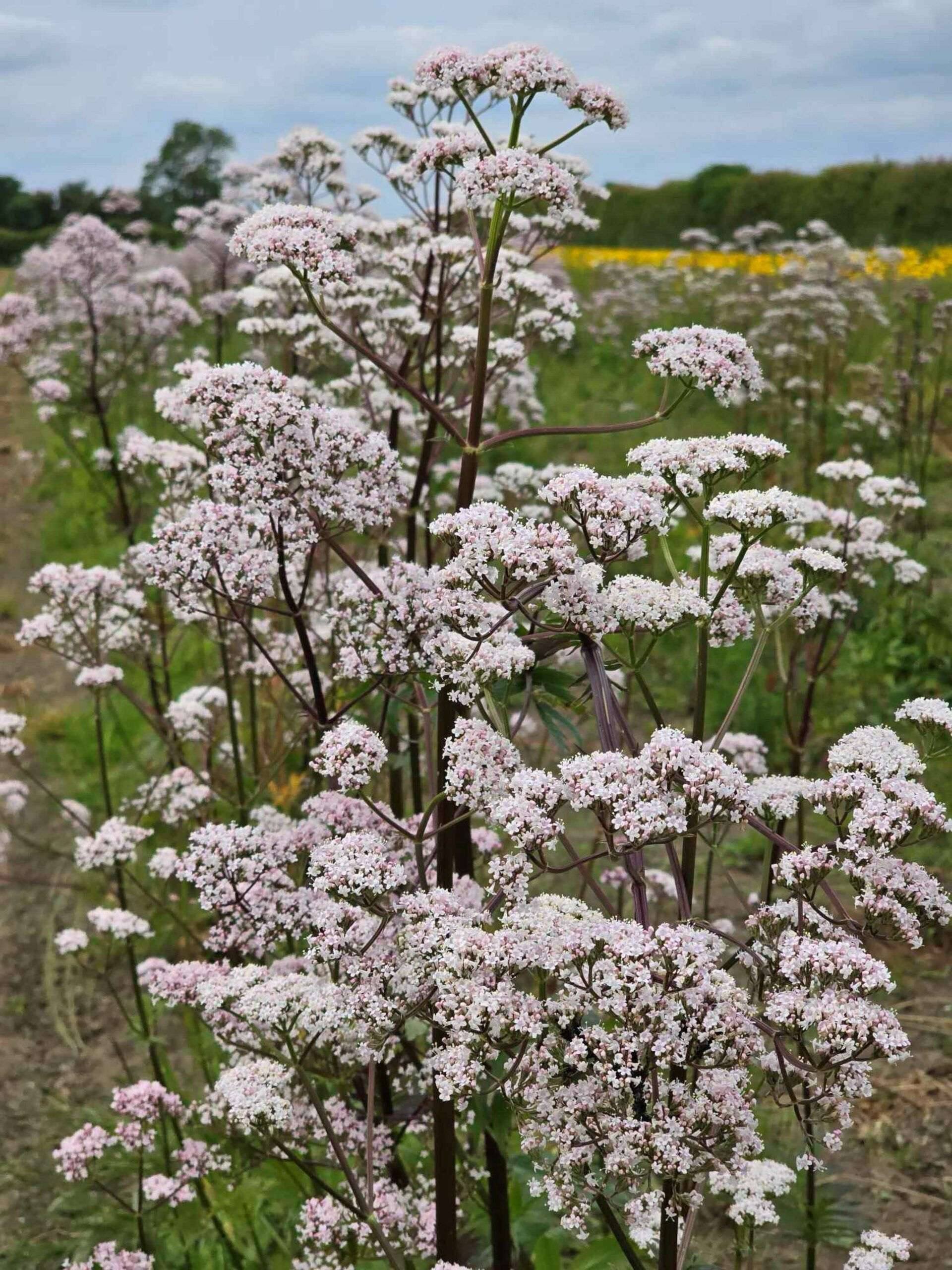
Valeriana officinalis
Common Valerian is an elegant UK‑native perennial with tall, airy stems topped by soft clusters of pale pink‑white flowers that float above lush, divided foliage. Its height and gentle movement make it perfect for naturalistic borders, damp meadows, and wildlife‑friendly plantings. It pairs beautifully with Meadowsweet and Purple Loosestrife, both of which are also available in our store.
🌿 Full Sun, Part Sun
🌿 Medium Pollen
🌿 Growth Habit: Returns each year; spreads by seed and short rhizomes
🌿 Large flower; Height & Spread = 100–150 cm tall × 45–75 cm wide
🌿 Wildlife Value: Highly attractive to hoverflies, bees, and other beneficial insects; its hollow stems also provide overwintering habitat for small invertebrates.
Care: Common Valerian thrives in moist, well-drained soil and prefers full sun but tolerates part sun. It performs especially well in damp borders, near ponds, or in areas with consistent moisture. Water regularly during dry spells. Suitable for large, deep pots with a minimum depth and diameter of 35–40 cm to support its tall stems and spreading roots. When planting in the ground, leave at least 60 cm of space around each plant to allow for its mature size. It self-seeds moderately; removing spent flower heads before seed pods form will reduce spread. Dies back completely in winter and returns strongly in spring.
Allergen Information: Medium pollen. Flowers from June to August, with pollen levels highest in midsummer. Individual sensitivities can vary and may develop over time. Pocket Wilds accepts no responsibility for any allergic reaction.
Pet Safety Notice: This plant is not pet friendly. All parts of Common Valerian contain compounds that may cause digestive upset if eaten by dogs or cats, and the roots can be particularly attractive to some animals due to their strong scent. Avoid planting where pets are likely to dig or chew, and supervise curious animals around young plants.
Fun Fact: In English folklore, Valerian was believed to attract mischievous fairies, and it was sometimes hung in cottages to keep them from causing trouble. Its strong‑scented roots were also traditionally used to lure rats away from grain stores — a detail that may have inspired the legend of the Pied Piper.